
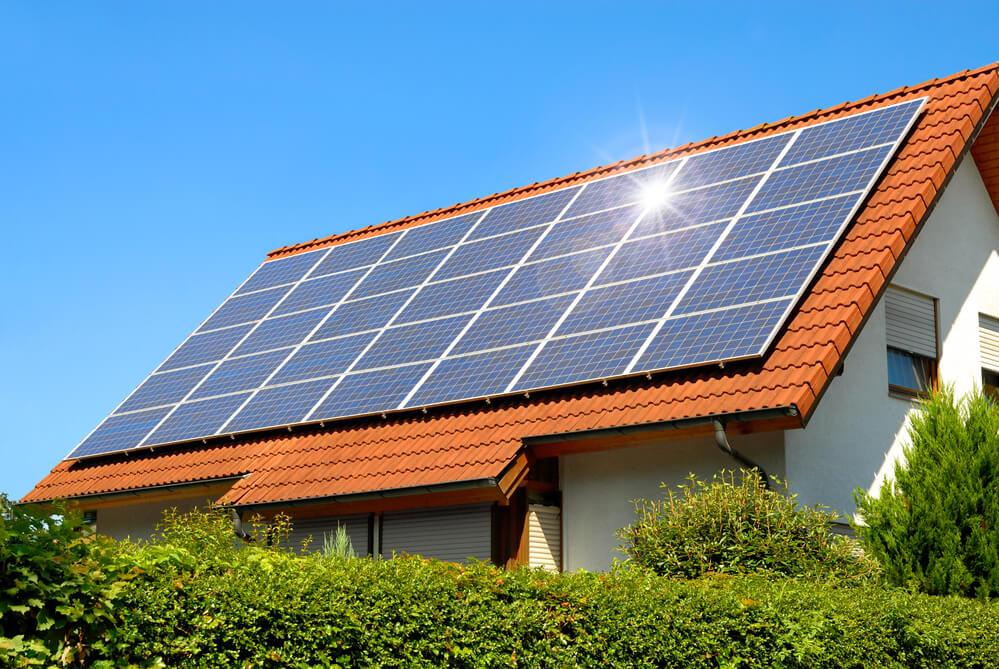
Mono PERC Solar Panel 540W+
High-efficiency module for residential, commercial and industrial arrays.
Product₹14,500 - ₹18,500
Installation₹1,500 - ₹3,500 / panel
BHAVANI INFRA • SOLAR SHOP
Professional equipment and replacement parts for new installation, maintenance and repair requirements.

High-efficiency module for residential, commercial and industrial arrays.

Grid-connected inverter with monitoring and modern protection functions.

Battery storage option for backup and energy management applications.

Replacement connector pair for approved photovoltaic DC cable terminations.
Solar-grade DC cable for array string wiring and repair replacement.

DC distribution and protection assembly for photovoltaic array circuits.
AC-side protection assembly between inverter output and electrical distribution.

Mounting rails, clamps and fasteners for rooftop module installation and replacement.

Model-specific repair kit for supported inverter service and cooling restoration.
Replacement fuse and holder set for compatible PV string protection assemblies.

Practical maintenance kit for surface cleaning and basic visual inspection support.
Structured diagnostic visit for low generation, inverter alarms, cable faults and protection issues.
Solar module selection is an important part of products planning because customers need both technical clarity and practical expectations. The purpose of this section is to explain the decisions behind the visible equipment and to show how each decision connects to safety, performance, cost, serviceability and long-term ownership.
A professional solar decision starts with context rather than a single product specification. Electricity consumption, available roof or land area, shade, orientation, structural condition, tariff, daytime load, backup expectations and future expansion all influence the final recommendation. A good project process therefore connects energy data with physical site information before equipment is selected. This prevents oversizing, undersizing and avoidable changes during installation. It also gives the customer a clearer basis for comparing quotations because the discussion focuses on scope, assumptions, protection, workmanship and service responsibilities instead of only headline capacity.
BHAVANI INFRA treats each stage as part of one lifecycle. Survey information should flow into design; design decisions should be reflected in mounting, cable routing and protection; commissioning results should become the baseline for monitoring; and maintenance records should help diagnose future changes in performance. When these stages are disconnected, small documentation gaps can become larger service problems later. A structured workflow makes the system easier to understand, maintain and expand. It also gives the admin team a consistent place to manage service descriptions, project examples, products, policies, images and customer enquiries.
Solar equipment works as a system, not as isolated components. Modules, inverter, DC and AC protection, earthing, surge protection, connectors, cables, mounting hardware and monitoring must be compatible with the electrical and environmental conditions of the site. Selection should account for rated limits, temperature, voltage windows, current, protection coordination, cable distance and maintainability. The lowest initial cost is not automatically the lowest lifecycle cost if access is difficult, replacement parts are unavailable or installation quality creates recurring faults. Clear documentation and realistic product information help customers make more durable decisions.
Performance estimates should always be treated as indicative until a detailed assessment is complete. Weather, shade, soiling, module temperature, inverter efficiency, cable losses, clipping, grid availability and operating behaviour can change actual energy production. Similarly, financial savings depend on tariff, self-consumption, export rules and how the building uses electricity during solar production hours. A calculator is useful for early planning, but it should lead to better questions rather than a guaranteed result. The final quotation should identify the assumptions used and separate equipment cost, installation scope and optional service work.
Long-term reliability depends on inspection and maintenance as much as initial installation. Visual checks, cleaning where appropriate, connector and cable inspection, inverter alarms, protection devices, earthing, mounting condition and generation trends can reveal developing issues before they become major failures. Maintenance should be proportionate to the site environment and equipment. Industrial dust, coastal conditions, difficult roof access or high operational importance may justify more structured checks. The objective is not unnecessary intervention; it is to maintain safety, performance visibility and a clear service history over the life of the system.
For solar module selection, the most useful next step is to record the site-specific facts, identify any unknowns and confirm them during survey or technical review. This website therefore presents information as structured guidance, while the quotation and admin-managed service records provide the project-specific scope. That separation keeps general education useful without presenting estimates or example data as a guarantee.
Inverter and power electronics is an important part of products planning because customers need both technical clarity and practical expectations. The purpose of this section is to explain the decisions behind the visible equipment and to show how each decision connects to safety, performance, cost, serviceability and long-term ownership.
A professional solar decision starts with context rather than a single product specification. Electricity consumption, available roof or land area, shade, orientation, structural condition, tariff, daytime load, backup expectations and future expansion all influence the final recommendation. A good project process therefore connects energy data with physical site information before equipment is selected. This prevents oversizing, undersizing and avoidable changes during installation. It also gives the customer a clearer basis for comparing quotations because the discussion focuses on scope, assumptions, protection, workmanship and service responsibilities instead of only headline capacity.
BHAVANI INFRA treats each stage as part of one lifecycle. Survey information should flow into design; design decisions should be reflected in mounting, cable routing and protection; commissioning results should become the baseline for monitoring; and maintenance records should help diagnose future changes in performance. When these stages are disconnected, small documentation gaps can become larger service problems later. A structured workflow makes the system easier to understand, maintain and expand. It also gives the admin team a consistent place to manage service descriptions, project examples, products, policies, images and customer enquiries.
Solar equipment works as a system, not as isolated components. Modules, inverter, DC and AC protection, earthing, surge protection, connectors, cables, mounting hardware and monitoring must be compatible with the electrical and environmental conditions of the site. Selection should account for rated limits, temperature, voltage windows, current, protection coordination, cable distance and maintainability. The lowest initial cost is not automatically the lowest lifecycle cost if access is difficult, replacement parts are unavailable or installation quality creates recurring faults. Clear documentation and realistic product information help customers make more durable decisions.
Performance estimates should always be treated as indicative until a detailed assessment is complete. Weather, shade, soiling, module temperature, inverter efficiency, cable losses, clipping, grid availability and operating behaviour can change actual energy production. Similarly, financial savings depend on tariff, self-consumption, export rules and how the building uses electricity during solar production hours. A calculator is useful for early planning, but it should lead to better questions rather than a guaranteed result. The final quotation should identify the assumptions used and separate equipment cost, installation scope and optional service work.
Long-term reliability depends on inspection and maintenance as much as initial installation. Visual checks, cleaning where appropriate, connector and cable inspection, inverter alarms, protection devices, earthing, mounting condition and generation trends can reveal developing issues before they become major failures. Maintenance should be proportionate to the site environment and equipment. Industrial dust, coastal conditions, difficult roof access or high operational importance may justify more structured checks. The objective is not unnecessary intervention; it is to maintain safety, performance visibility and a clear service history over the life of the system.
For inverter and power electronics, the most useful next step is to record the site-specific facts, identify any unknowns and confirm them during survey or technical review. This website therefore presents information as structured guidance, while the quotation and admin-managed service records provide the project-specific scope. That separation keeps general education useful without presenting estimates or example data as a guarantee.

Protection, cabling and connectors is an important part of products planning because customers need both technical clarity and practical expectations. The purpose of this section is to explain the decisions behind the visible equipment and to show how each decision connects to safety, performance, cost, serviceability and long-term ownership.
A professional solar decision starts with context rather than a single product specification. Electricity consumption, available roof or land area, shade, orientation, structural condition, tariff, daytime load, backup expectations and future expansion all influence the final recommendation. A good project process therefore connects energy data with physical site information before equipment is selected. This prevents oversizing, undersizing and avoidable changes during installation. It also gives the customer a clearer basis for comparing quotations because the discussion focuses on scope, assumptions, protection, workmanship and service responsibilities instead of only headline capacity.
BHAVANI INFRA treats each stage as part of one lifecycle. Survey information should flow into design; design decisions should be reflected in mounting, cable routing and protection; commissioning results should become the baseline for monitoring; and maintenance records should help diagnose future changes in performance. When these stages are disconnected, small documentation gaps can become larger service problems later. A structured workflow makes the system easier to understand, maintain and expand. It also gives the admin team a consistent place to manage service descriptions, project examples, products, policies, images and customer enquiries.
Solar equipment works as a system, not as isolated components. Modules, inverter, DC and AC protection, earthing, surge protection, connectors, cables, mounting hardware and monitoring must be compatible with the electrical and environmental conditions of the site. Selection should account for rated limits, temperature, voltage windows, current, protection coordination, cable distance and maintainability. The lowest initial cost is not automatically the lowest lifecycle cost if access is difficult, replacement parts are unavailable or installation quality creates recurring faults. Clear documentation and realistic product information help customers make more durable decisions.
Performance estimates should always be treated as indicative until a detailed assessment is complete. Weather, shade, soiling, module temperature, inverter efficiency, cable losses, clipping, grid availability and operating behaviour can change actual energy production. Similarly, financial savings depend on tariff, self-consumption, export rules and how the building uses electricity during solar production hours. A calculator is useful for early planning, but it should lead to better questions rather than a guaranteed result. The final quotation should identify the assumptions used and separate equipment cost, installation scope and optional service work.
Long-term reliability depends on inspection and maintenance as much as initial installation. Visual checks, cleaning where appropriate, connector and cable inspection, inverter alarms, protection devices, earthing, mounting condition and generation trends can reveal developing issues before they become major failures. Maintenance should be proportionate to the site environment and equipment. Industrial dust, coastal conditions, difficult roof access or high operational importance may justify more structured checks. The objective is not unnecessary intervention; it is to maintain safety, performance visibility and a clear service history over the life of the system.
For protection, cabling and connectors, the most useful next step is to record the site-specific facts, identify any unknowns and confirm them during survey or technical review. This website therefore presents information as structured guidance, while the quotation and admin-managed service records provide the project-specific scope. That separation keeps general education useful without presenting estimates or example data as a guarantee.
Mounting hardware and repair parts is an important part of products planning because customers need both technical clarity and practical expectations. The purpose of this section is to explain the decisions behind the visible equipment and to show how each decision connects to safety, performance, cost, serviceability and long-term ownership.
A professional solar decision starts with context rather than a single product specification. Electricity consumption, available roof or land area, shade, orientation, structural condition, tariff, daytime load, backup expectations and future expansion all influence the final recommendation. A good project process therefore connects energy data with physical site information before equipment is selected. This prevents oversizing, undersizing and avoidable changes during installation. It also gives the customer a clearer basis for comparing quotations because the discussion focuses on scope, assumptions, protection, workmanship and service responsibilities instead of only headline capacity.
BHAVANI INFRA treats each stage as part of one lifecycle. Survey information should flow into design; design decisions should be reflected in mounting, cable routing and protection; commissioning results should become the baseline for monitoring; and maintenance records should help diagnose future changes in performance. When these stages are disconnected, small documentation gaps can become larger service problems later. A structured workflow makes the system easier to understand, maintain and expand. It also gives the admin team a consistent place to manage service descriptions, project examples, products, policies, images and customer enquiries.
Solar equipment works as a system, not as isolated components. Modules, inverter, DC and AC protection, earthing, surge protection, connectors, cables, mounting hardware and monitoring must be compatible with the electrical and environmental conditions of the site. Selection should account for rated limits, temperature, voltage windows, current, protection coordination, cable distance and maintainability. The lowest initial cost is not automatically the lowest lifecycle cost if access is difficult, replacement parts are unavailable or installation quality creates recurring faults. Clear documentation and realistic product information help customers make more durable decisions.
Performance estimates should always be treated as indicative until a detailed assessment is complete. Weather, shade, soiling, module temperature, inverter efficiency, cable losses, clipping, grid availability and operating behaviour can change actual energy production. Similarly, financial savings depend on tariff, self-consumption, export rules and how the building uses electricity during solar production hours. A calculator is useful for early planning, but it should lead to better questions rather than a guaranteed result. The final quotation should identify the assumptions used and separate equipment cost, installation scope and optional service work.
Long-term reliability depends on inspection and maintenance as much as initial installation. Visual checks, cleaning where appropriate, connector and cable inspection, inverter alarms, protection devices, earthing, mounting condition and generation trends can reveal developing issues before they become major failures. Maintenance should be proportionate to the site environment and equipment. Industrial dust, coastal conditions, difficult roof access or high operational importance may justify more structured checks. The objective is not unnecessary intervention; it is to maintain safety, performance visibility and a clear service history over the life of the system.
For mounting hardware and repair parts, the most useful next step is to record the site-specific facts, identify any unknowns and confirm them during survey or technical review. This website therefore presents information as structured guidance, while the quotation and admin-managed service records provide the project-specific scope. That separation keeps general education useful without presenting estimates or example data as a guarantee.

Installation pricing, warranty and replacement planning is an important part of products planning because customers need both technical clarity and practical expectations. The purpose of this section is to explain the decisions behind the visible equipment and to show how each decision connects to safety, performance, cost, serviceability and long-term ownership.
A professional solar decision starts with context rather than a single product specification. Electricity consumption, available roof or land area, shade, orientation, structural condition, tariff, daytime load, backup expectations and future expansion all influence the final recommendation. A good project process therefore connects energy data with physical site information before equipment is selected. This prevents oversizing, undersizing and avoidable changes during installation. It also gives the customer a clearer basis for comparing quotations because the discussion focuses on scope, assumptions, protection, workmanship and service responsibilities instead of only headline capacity.
BHAVANI INFRA treats each stage as part of one lifecycle. Survey information should flow into design; design decisions should be reflected in mounting, cable routing and protection; commissioning results should become the baseline for monitoring; and maintenance records should help diagnose future changes in performance. When these stages are disconnected, small documentation gaps can become larger service problems later. A structured workflow makes the system easier to understand, maintain and expand. It also gives the admin team a consistent place to manage service descriptions, project examples, products, policies, images and customer enquiries.
Solar equipment works as a system, not as isolated components. Modules, inverter, DC and AC protection, earthing, surge protection, connectors, cables, mounting hardware and monitoring must be compatible with the electrical and environmental conditions of the site. Selection should account for rated limits, temperature, voltage windows, current, protection coordination, cable distance and maintainability. The lowest initial cost is not automatically the lowest lifecycle cost if access is difficult, replacement parts are unavailable or installation quality creates recurring faults. Clear documentation and realistic product information help customers make more durable decisions.
Performance estimates should always be treated as indicative until a detailed assessment is complete. Weather, shade, soiling, module temperature, inverter efficiency, cable losses, clipping, grid availability and operating behaviour can change actual energy production. Similarly, financial savings depend on tariff, self-consumption, export rules and how the building uses electricity during solar production hours. A calculator is useful for early planning, but it should lead to better questions rather than a guaranteed result. The final quotation should identify the assumptions used and separate equipment cost, installation scope and optional service work.
Long-term reliability depends on inspection and maintenance as much as initial installation. Visual checks, cleaning where appropriate, connector and cable inspection, inverter alarms, protection devices, earthing, mounting condition and generation trends can reveal developing issues before they become major failures. Maintenance should be proportionate to the site environment and equipment. Industrial dust, coastal conditions, difficult roof access or high operational importance may justify more structured checks. The objective is not unnecessary intervention; it is to maintain safety, performance visibility and a clear service history over the life of the system.
For installation pricing, warranty and replacement planning, the most useful next step is to record the site-specific facts, identify any unknowns and confirm them during survey or technical review. This website therefore presents information as structured guidance, while the quotation and admin-managed service records provide the project-specific scope. That separation keeps general education useful without presenting estimates or example data as a guarantee.